
BARRIERS FOR CIRCULAR SOLUTIONS
Legislation that promotes the circular economy– what does it require?
A New Case-based Whitepaper on:
Legislation Promoting the Circular Economy
How can legislation be transformed from being a barrier to support companies in fully achieving their ambitions for transitioning to a circular economy?
This ongoing working white paper, produced by TRACE - Denmark's national
Innomission for Circular Economy - synthesizes findings from multiple real-
world circular economy projects spanning plastics, textiles, electronics,
healthcare, and construction.
Each project has encountered regulatory and legislative barriers that hinder
the transition from linear to circular business models. While many of these
regulations were originally enacted to protect people and the environment,
they were designed in the context of a linear economy where waste collection
for incineration was the default.
This paper identifies these barriers and presents concrete, actionable
recommendations to update legislative frameworks, so they actively
promote - rather than obstruct - the circular economy.
Circular Sandbox: Test environments for innovation
To accelerate the transition to a circular economy it is required that some solutions go beyond incremental improvements to existing linear systems.
A circular sandbox would allow authorities and companies to test new circular solutions at limited scale under defined and monitored conditions.
Main authors
Christian Bladt Brandt, Danish Technological Institute
Nikolaj Lilholm Villadsen, Danish Technological Institute
Søren Haack, Danish Technological Institute
PUBLIC PROCUREMENT
Imagine a world where circular solutions are the most attractive choice
Imagine a world where using fewer resources is not experienced as a sacrifice, but as freedom
Imagine a world where we don’t automatically buy something new, but instead use, repair, and adapt what we already have. A world where workwear is designed to last for decades rather than seasons, and where furniture in offices, schools, and hospitals is deliberately chosen for long lifespan, flexibility, and repairability.
We work on changing the market towards circular solutions in collaboration and create knowledge across all actors. Based on insights from 9 projects and 70 partners, this session brought together a panel of five members, each contributing with solutions to systemic changes.
Projects:
- CircleHealth
- CircularTex
- OneTextileDirection
- Regulation for Circularity
- Blesystem 2030
- Mattresses - Reuse and ReCycle Systems
- Design2Use
- Holimed
- Decouple

Tipping Points for Systemic Change
How can Public Procurement Contribute to making Circular Solutions the most Attractive Choice?
DESIGN FOR CIRCULARITY
From Design to Longevity
Design and production
TRACE works to build circular ecosystems across the entire value chain. This session focuses on the Design & Production pillar, presenting design-driven innovations that enable extended product lifetimes and lifetime-based service systems.
The session presents results from a broad portfolio of projects developed in collaboration with a diverse range of external partners. It was designed as an interactive experience, where participants have the opportunity to engage directly with the researchers behind the projects, ask questions, and gain deeper insight into the work and its outcomes.
In addition to the presentations, the session includes an interactive quiz, offering a prize to one attentive and observant participant.

The 6 projects demonstrate synergies and potential for collaboration
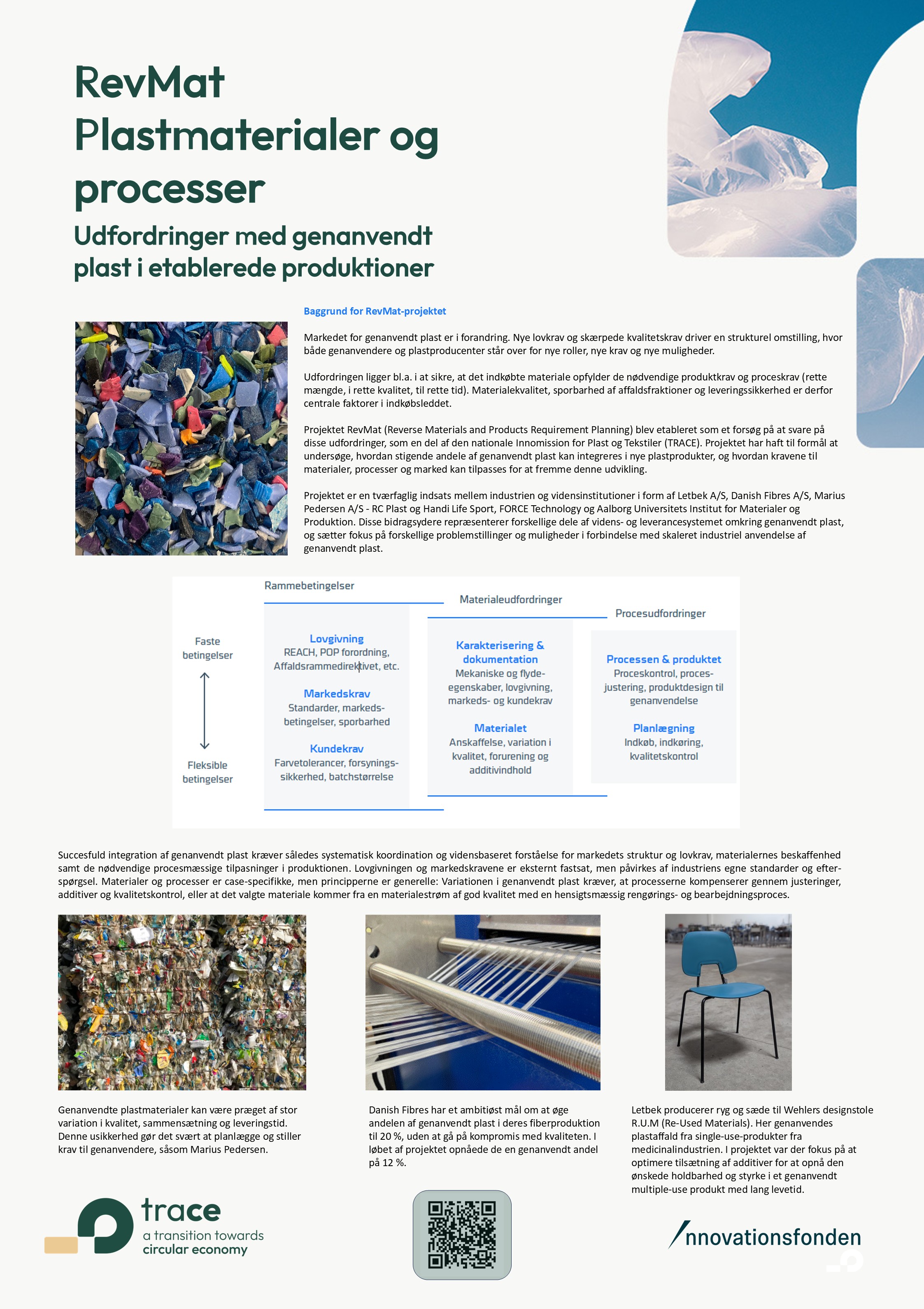
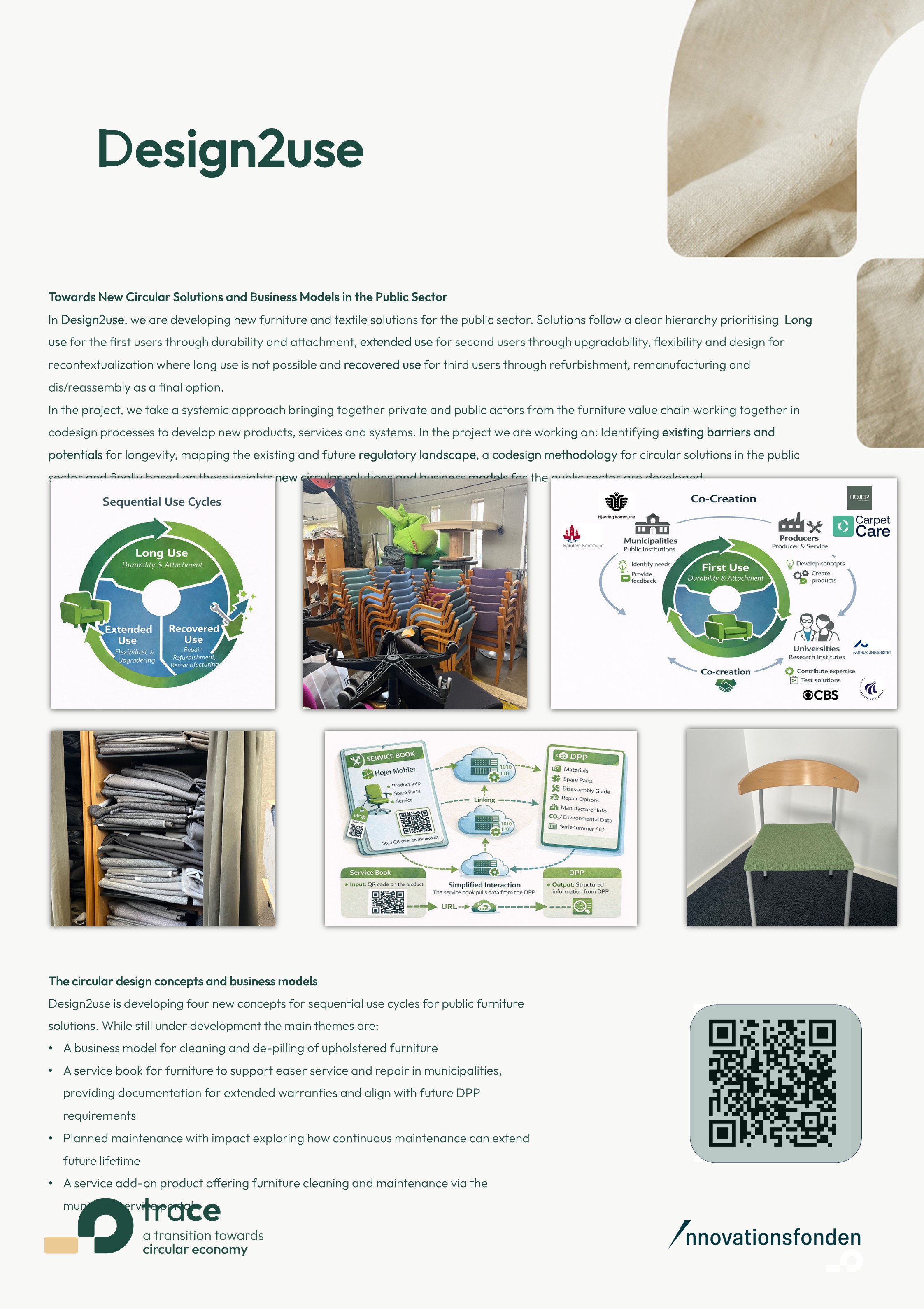

Knowlegde, synergies and interaction
The session aimed to share knowledge across projects and highlight their synergies. It created a space for dialogue and interaction, supporting knowledge exchange and collaboration between partners.
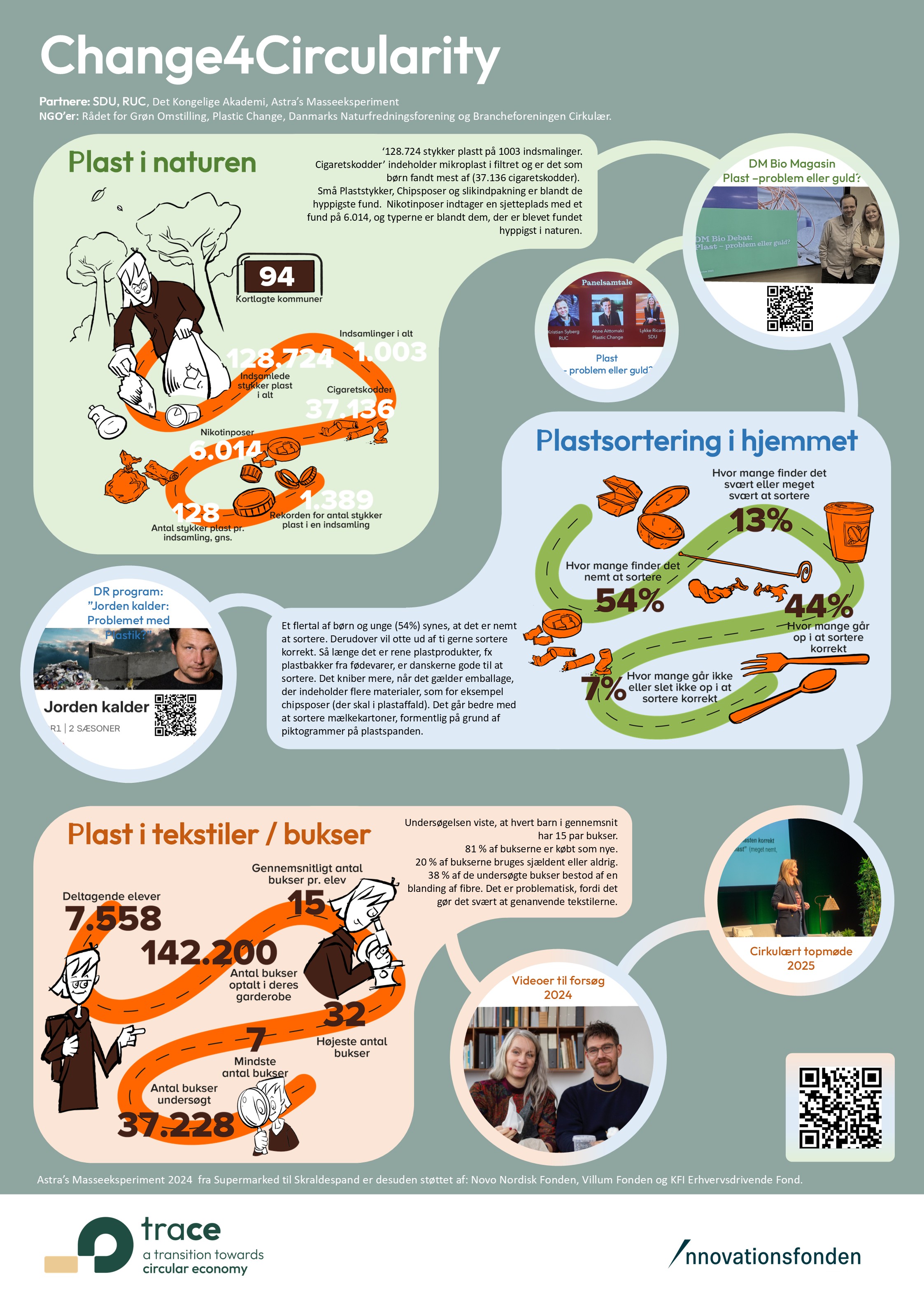
Change4Circularity: University of Southern Denmark, Roskilde University, Astra, Rådet for Grøn Omstilling, Plastic Change, Danmarks Naturfredningsforening, Brancheforeningen Circular, the Royal Danish Academy
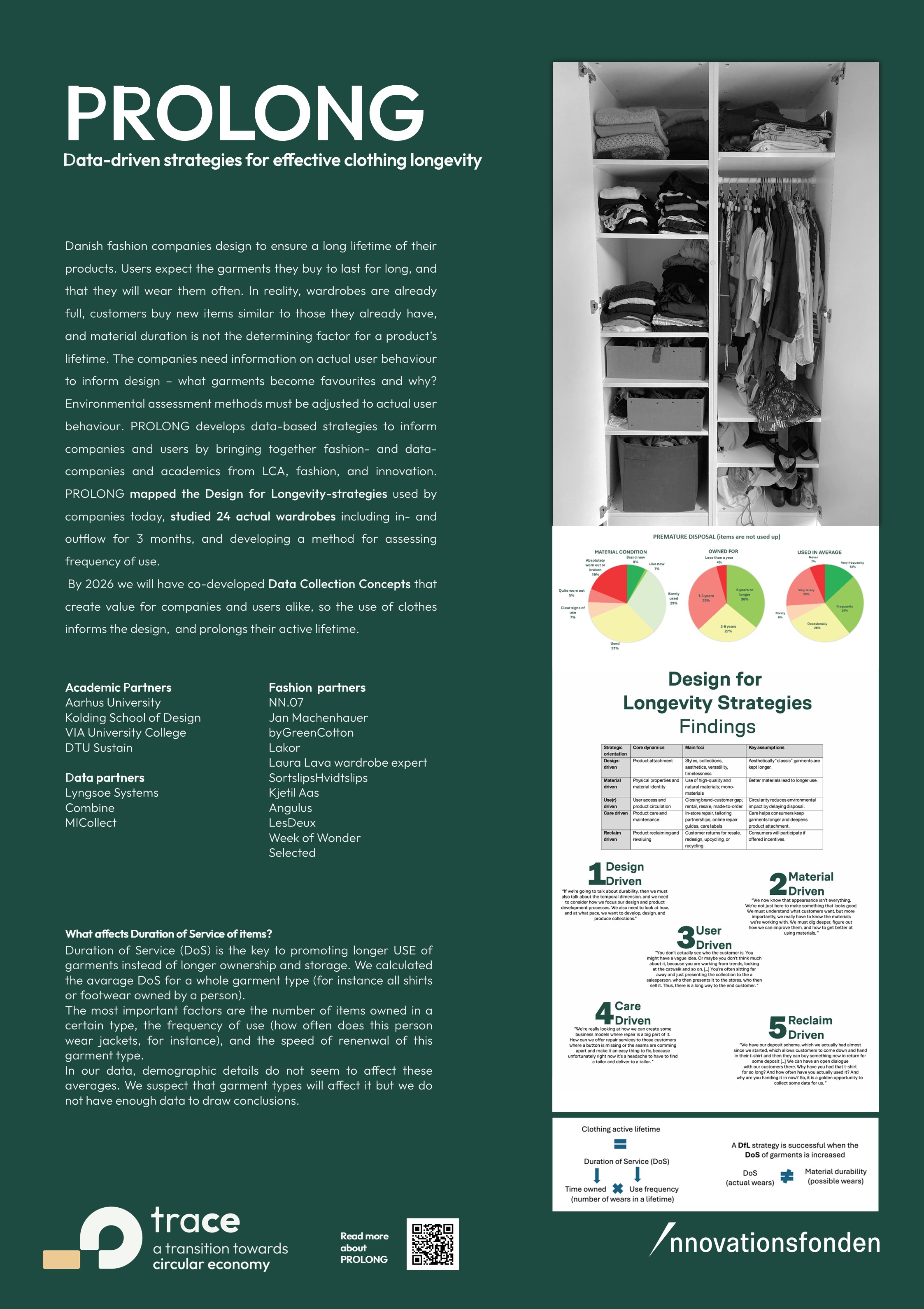
Prolong: Aalborg University, VIA University College, Technical University of Denmark, Design School Kolding, Tekstilrevolutionen ApS, Jan Machenhauer, NN07, MICollect ApS, Højer Møbler A/S, Combine A/S, Lakor Aps, Laura Lava, Les Deux, Lyngsoe Systems A/S, A.M. Victoria v/ Anne, Mette V Ladefoged Hansen (Sort Slips Hvid Slips), E T A L Lifestyle Aps, Danish Technological Institute, Aarhus University, By Green Cotton, Angulus
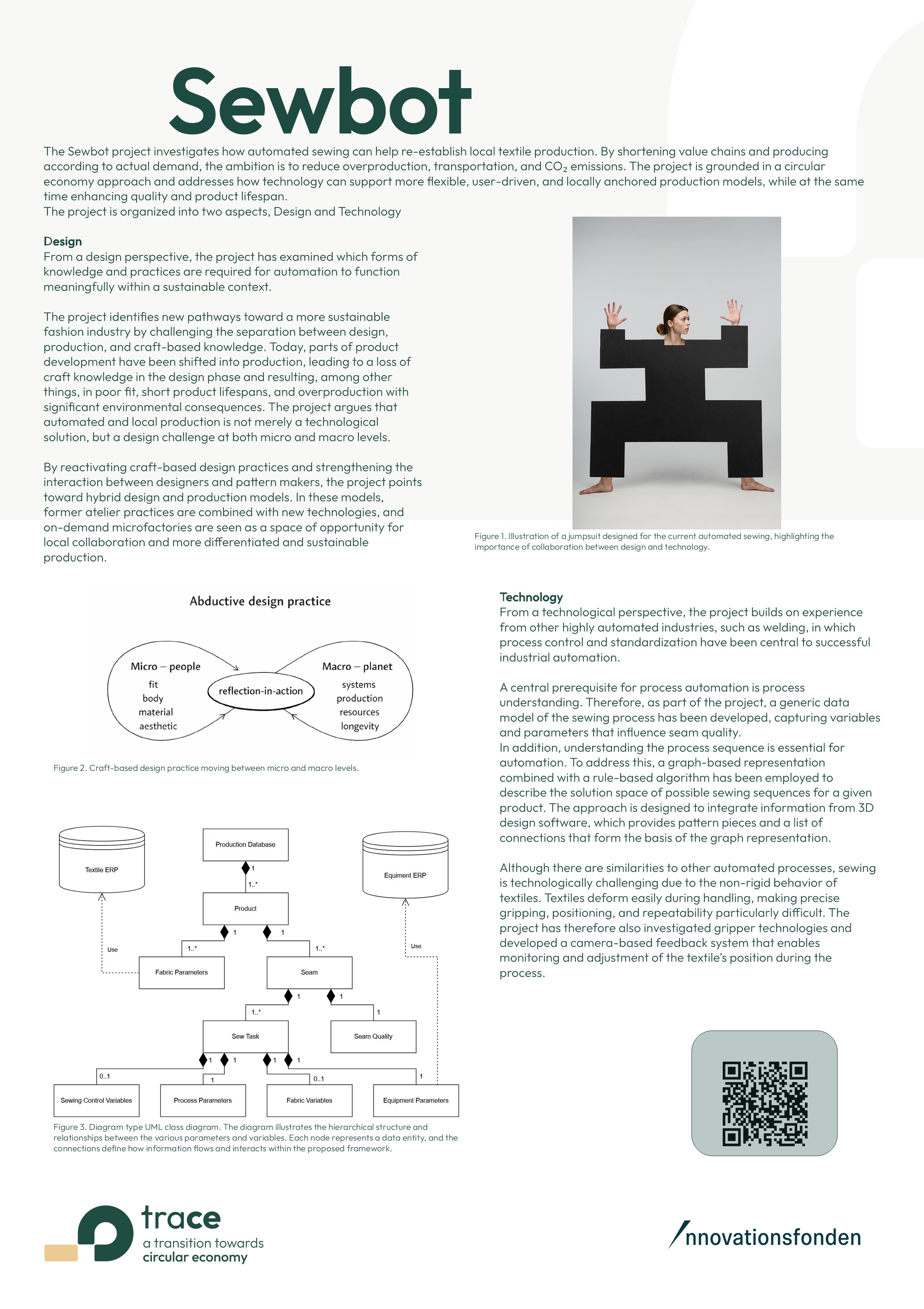
Sewbot: The Royal Danish Academy, Lifestyle & Design Cluster, Aalborg University, Nordtec-Optomatic A/S, Son of a Tailor, LTP Group
RevMat: FORCE Technology, Aalborg University, RC Plast A/S, Letbæk Plast A/S, Handi Life Sport ApS, Danish Fibers A/S
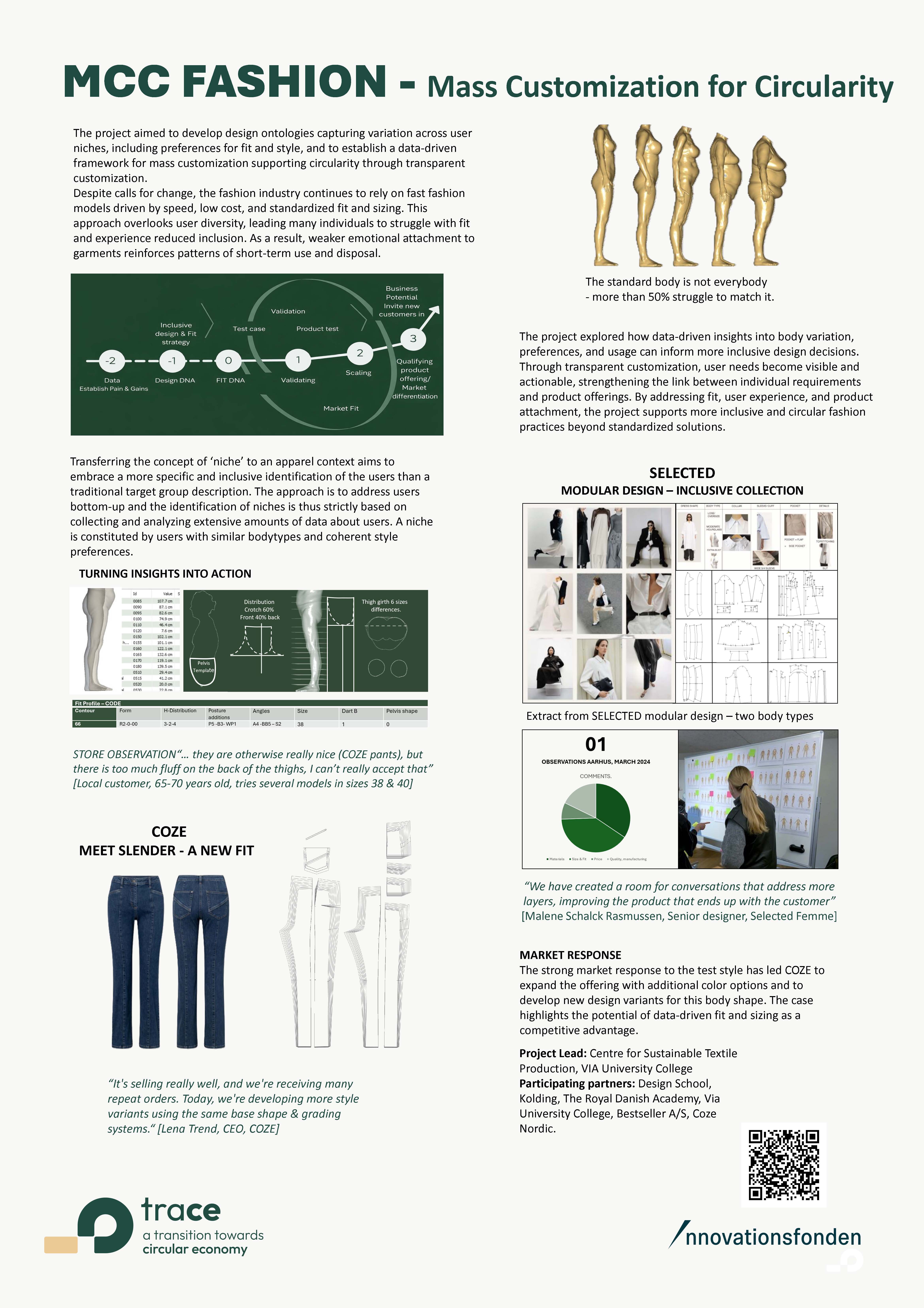
MCC Fashion: VIA University College, the Royal Danish Academy, Design School Kolding, Coze Aarhus, BESTSELLER A/S
Design2Use: Aalborg University, Hjørring Municipality, Randers Kommune, CarpetCare, Copenhagen Business School, Højer Møbler A/S, Aarhus University
Read more
About the author
Anette Juhl
Director of Trace