
Design for Disassembly is a small, yet essential experimental study. We have embarked on this journey in the innomission partnership to develop new methods and guidelines to design for a circular economy.
There is an extensive research gap between product design and circular economy. For long we have designed products for a take-make-dispose economy. It is time for a change to design for circularity.

Design for Disassembly
Lead Organisation: The University of Southern Denmark
Project Period: August 2022 - July 2024
Pool: TRACE Pool 1
Project Status: Finalized
Vision:
Design for disassembly as a key enabler for producers to prepare product and materials for circularity.
Drivers:
- Change of mindset in designing for disassembly
- Develop disassembly methods and design principles as guidelines.
- In the catalogue, solutions for optimizing existing product’s degree of recyclability.
- Develop an experiment for advanced robotic technology for reversed engineering integrating design4disassembly.
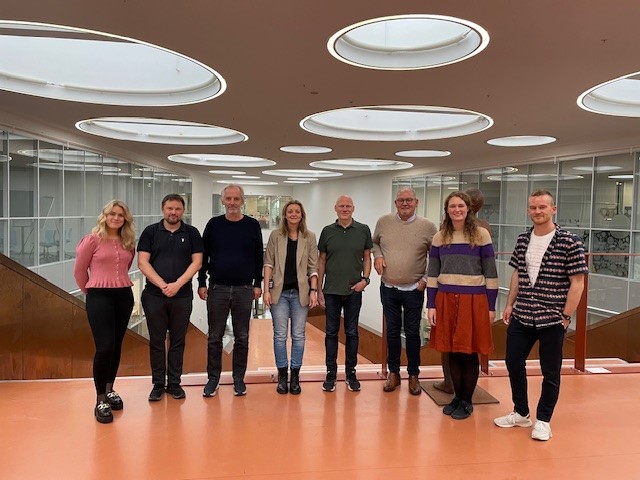
Participating partners: University of Southern Denmark, Grundfos Holding A/S, Danfoss Drives and LEGO System A/S.
The project approach
The focus on recyclability and reusability of materials have been primarily reactive focusing on treatment of waste only – and not going back to optimize design as to prevent waste.
According to EUs Eco-design Directive up to 80 percent of a products environmental impact goes back to the design decision phase. After a product’s end of life, the waste treatment is often at higher cost than the recovery value of the materials. This is often due to mixed materials being melted or glued together. There is an unexplored potential in opportunities for optimization of products recyclability with design for disassembly. Design for Disassembly aligns with circular economy, it meets the extended producer responsibility in a proactive way, by moving from a treatment to a prevention strategy.
Methods and expected outcome
Design4Disassembly include developing a disassembly method for accessing product design. This include testing solutions via digital twin design, which are developed to create a mathematical representation of the object in 3D that allow for dimensions, surfaces, and junctions to be accounted for in the design process and important decisions and tests can be conducted on low carbon expense for end-of-life scenarios. With a digital simulation experiment on disassembly, valuable data will be drawn and stored, and materials compositions in the product towards possible updates to the design.
The expected outcome has been to provide the companies with a digital twin catalogue to support integration of service, repairability and a higher material recovery of plastic at the product’s end-of life.
Prolonging lifetime
“Design for Disassembly ”has opened to service, repair, and refurbishment to prolong the lifetime of the products. We have developed the methods to also capture material recovery to create the circular loop of keeping products and materials in flow for as long as they hold value. Thus, it could be in remanufacturing or in increasing the degree of recyclability.
Product cases included the Grundfos’ circulator pump, the Danfoss’ drives, and the LEGO® mechatronics.
What has been done
Design for disassembly has worked on developing new methodologies for analysis such as disassembly maps, assessment of the system of fasteners, and the development of end-of-life scenarios about environmental footprinent and circularity of plastic materials, electronic components and potential of reuse components or critical metals.
If we can have cleaner fractions of materials, the potential for recycling plastic materials increases. Furthermore, suppose we can design for repair or design for harvesting critical metals, e.g., rare earth magnets or circuit boards (without compromising safety or product standards). In that case, it potentially becomes cheaper to do ‘urban mining’ from existing products and more likely to happen in safe environments in new value chains when preparing products for a circular economy.
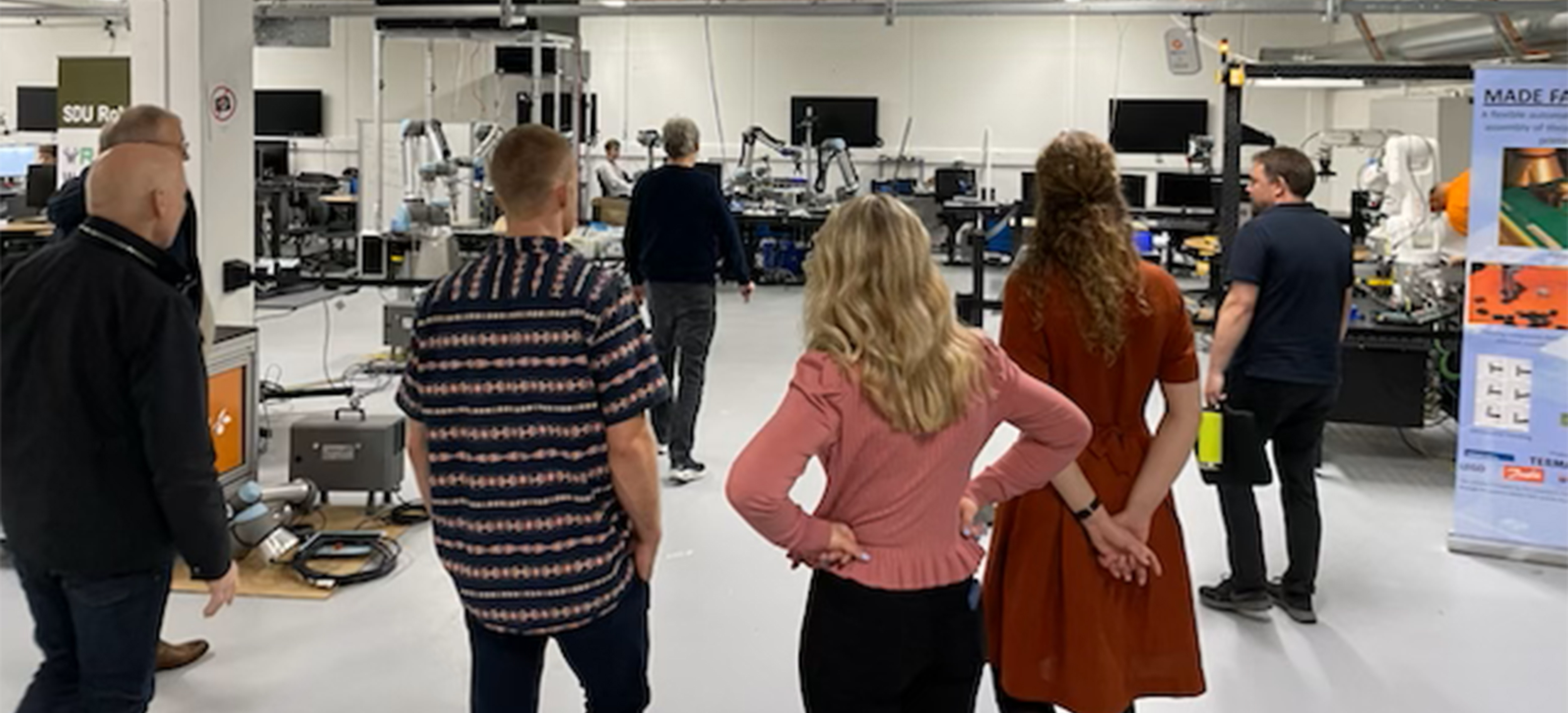
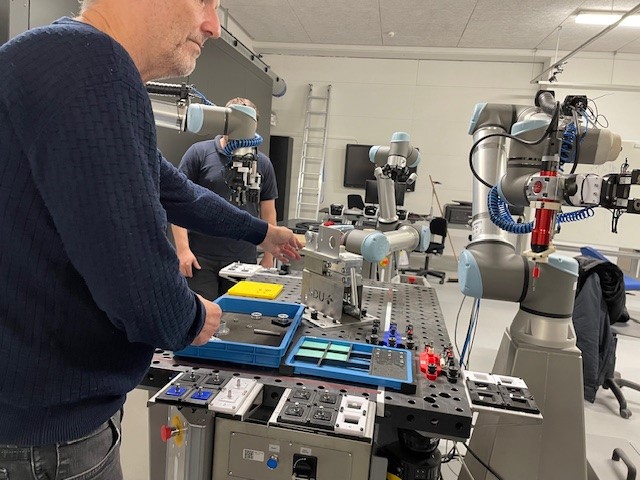
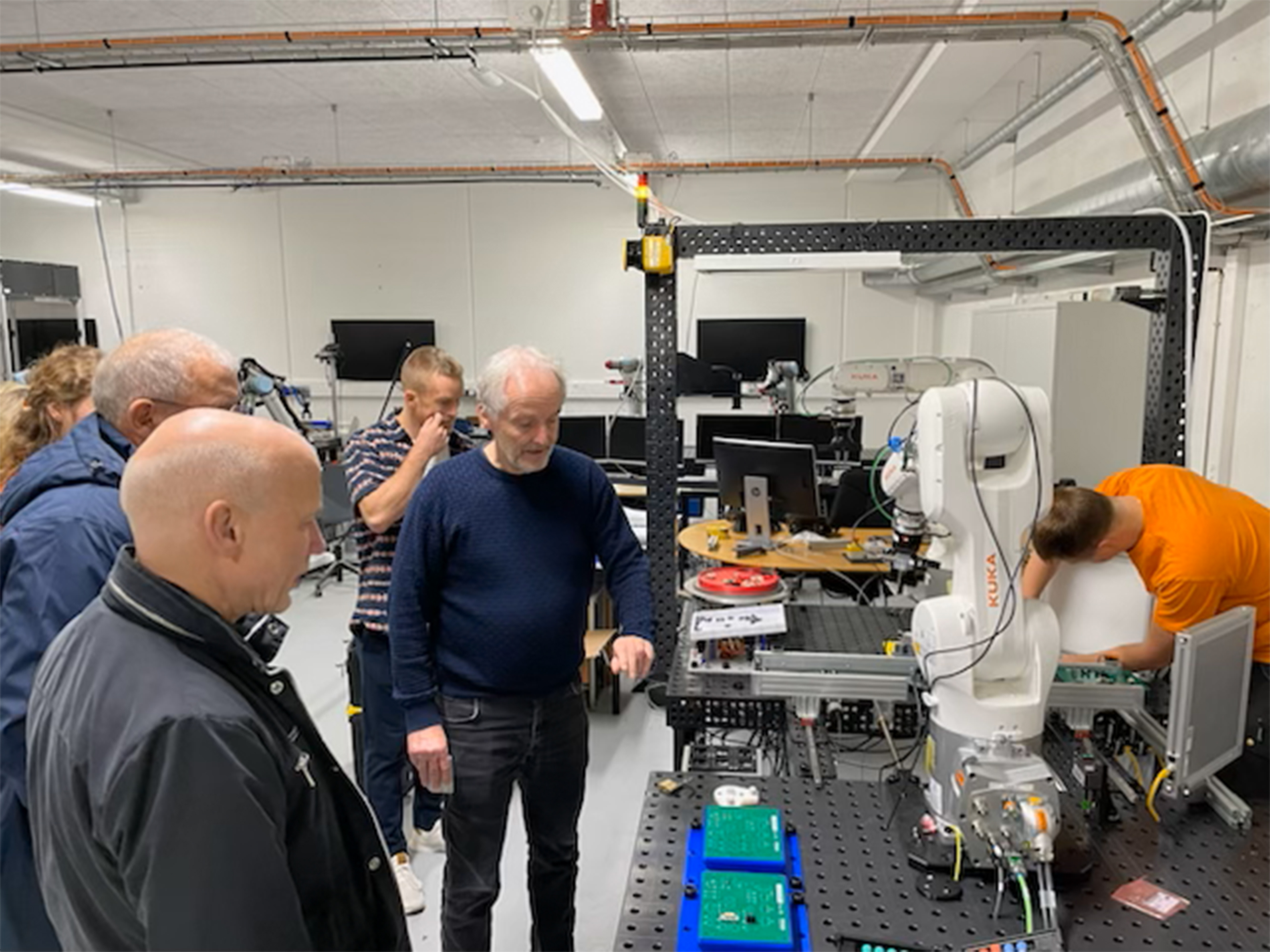
The project has also focused on moving towards a catalogue of design solutions aimed at increasing product recyclability and integrating the concept of design for disassembly into new product development. And established that effective disassembly will only be feasible through automation rather than manual work. In collaboration with SDU Robotic, we have set up a demo in the SDU Industry 4.0 Lab based on the LEGO® Group case. The demo leverages design disassembly maps and applies robotics to perform automated disassembly.
Finally the project has worked on evaluating optimisation opportunities for robotic disassembly and dismantling.
Who can use it?
The developed methods are now in further development and testing. The methods and design guidelines must be applied to more products on a larger scale, including ecodata to inform design scenarios.
Industrial manufacturers like this project’s partners Grundfos, Danfoss Drives and the LEGO Group are keen on moving towards more circularity of materials and components - in either a closed or open loop.
That said, one of the project’s impacts lies in creating inspiration and change in mindset in how we design products for Eco effectiveness - that it is possible to use design as a catalyst in preparing products for a circular economy.
The following studies have been published as part of the Trace-project Design4Disassembly:
- Hybel, S. B, Wilhøft, A. & Ricard, L. M. (2025). Participatory Product Disassemblability: Bridging Design, Sustainability, and Circular Strategies. I: Journal of Cleaner Production. 532, 10 s. Participatory Product Disassemblability
- Ricard, L. M., Hybel, S. B. & Jofre, S. (2024). Design as a catalyst for the circular economy. The Routledge Handbook of Catalysts for a Sustainable Circular Economy. Lehtimäki, H., Aarikka-Stenroos, L., Jokinen, A. & Jokinen, P. (red.). 1st udg. London: Routledge, s. 226-45 19 s. Design as a catalyst for the circular economy
- Ricard, L. M., Folkmann, E., Sørensen, L. C., Hybel, S. B., de Nóbrega, R. & Petersen, H. G. (2024). Design for Robotic Disassembly. I: Proceedings of the Design Society. 4, s. 2715-2724. Design for Robotic Disassembly
- Hybel, S. B., Ricard, L. M. & Petersen, H. G. (2022). Re-design for circular economies: PhD Poster. Re-design for circular economies: PhD Poster
Project Leader

Lykke Margot Ricard
Mail: lmri@iti.sdu.dk

Henrik Gordon Petersen
Other Plastic Projects


