

SEWBOT
Lead Organization: Aalborg University
Project Period: February 2024 – May 2026
Pool: TRACE Pool 1
Project Status: In progress
Local sewing of cloth, which can be cost-effective with sew-robots, can eliminate large quantities of excess production due to a fast response to market demands with a short supply chain. In Denmark, 677 tons of unused cloth are yearly burned due to excess production. It produces 45.000 tons of CO2. Reshoring textiles manufacturing back to Denmark through automation is estimated to create 1000+ jobs alone, and exports of know-how and technological solutions will be a valuable asset for DK.
Participating partners: Aalborg University, Lifestyle & Design Cluster, Royal Danish Adacemy, Nordtec-Optomatic A/S (NTO Automation A/S), Son of a Tailor and LTP Group.
Project Results
Design
From a design perspective, the project has examined which forms of knowledge and practices are required for automation to function meaningfully within a sustainable context.
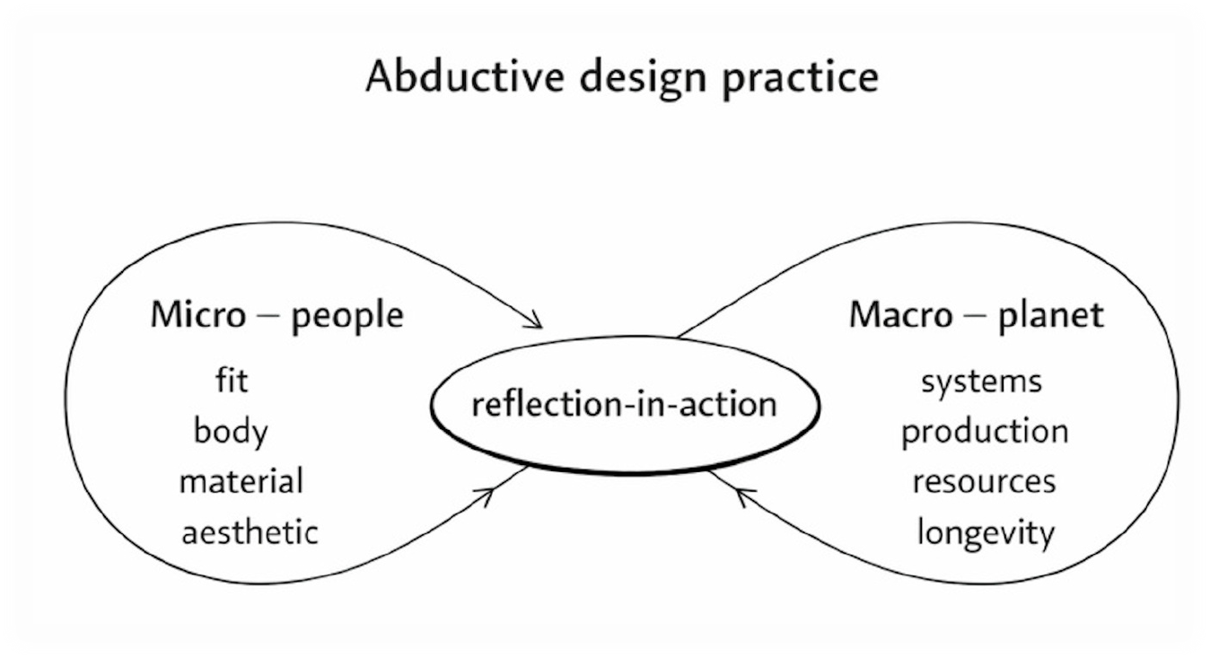
The project identifies new pathways toward a more sustainable fashion industry by challenging the separation between design, production, and craft-based knowledge. Today, parts of product development have been shifted into production, leading to a loss of craft knowledge in the design phase and resulting, among other things, in poor fit, short product lifespans, and overproduction with significant environmental consequences. The project argues that automated and local production is not merely a technological solution, but a design challenge at both micro and macro levels.
By reactivating craft-based design practices and strengthening the interaction between designers and pattern makers, the project points toward hybrid design and production models. In these models, former atelier practices are combined with new technologies, and on-demand microfactories are seen as a space of opportunity for local collaboration and more differentiated and sustainable production.
Technology
From a technological perspective, the project builds on experience from other highly automated industries, such as welding, in which process control and standardization have been central to successful industrial automation.
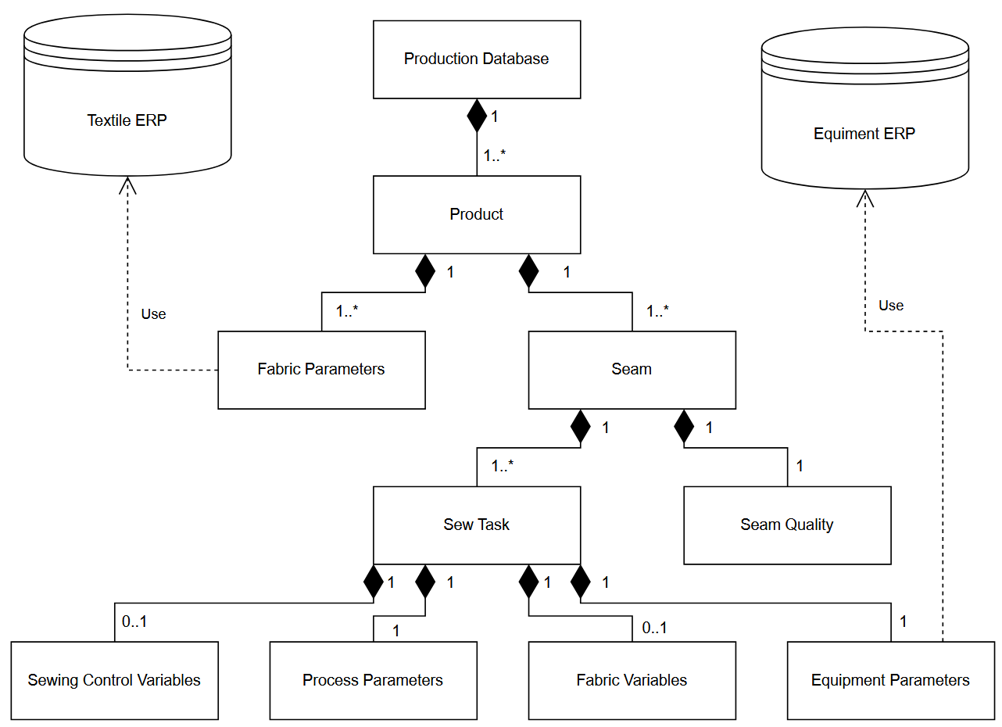
A central prerequisite for process automation is process understanding. Therefore, as part of the project, a generic data model of the sewing process has been developed, capturing variables and parameters that influence seam quality.
In addition, understanding the process sequence is essential for automation. To address this, a graph-based representation combined with a rule-based algorithm has been employed to describe the solution space of possible sewing sequences for a given product. The approach is designed to integrate information from 3D design software, which provides pattern pieces and a list of connections that form the basis of the graph representation.
Although there are similarities to other automated processes, sewing is technologically challenging due to the non-rigid behavior of textiles. Textiles deform easily during handling, making precise gripping, positioning, and repeatability particularly difficult. The project has therefore also investigated gripper technologies and developed a camera-based feedback system that enables monitoring and adjustment of the textile’s position during the process.
Project Leader

Morten Kristiansen
Mail: morten@mp.aau.dk
Other Textile Projects


