

One Textile Direction
Lead Organization: Danish Technological Institute
Project Period: November 2022 – November 2025
Pool: TRACE Pool 1
Project Status: Finalized
The purpose of One Textile Direction is to establish a new state-of-the-art for circular design, procurement, use, and reuse of textiles for the private household, public, and private professional sectors.
The vision is to strengthen Denmark´s position as a textile and design nation and make Denmark among the front runners for a circular textile industry.
The need is to establish a Danish value chain for collection, sorting, and textiles-to-textiles recycling. This will require automatized textile sorting or textile-to-textile recycling solutions, which are currently not commercially available in Denmark.
The Danish textile industry has not experienced the same increase in sustainability and circularity as in other industries, and transformation to a circular economy holds the potential for unlocking a growth potential.
Impact of One Textile Direction
One Textile Direction is expected to generate 12 new jobs in the project consortium and develop technologies for export within recycling- and spinning technologies.
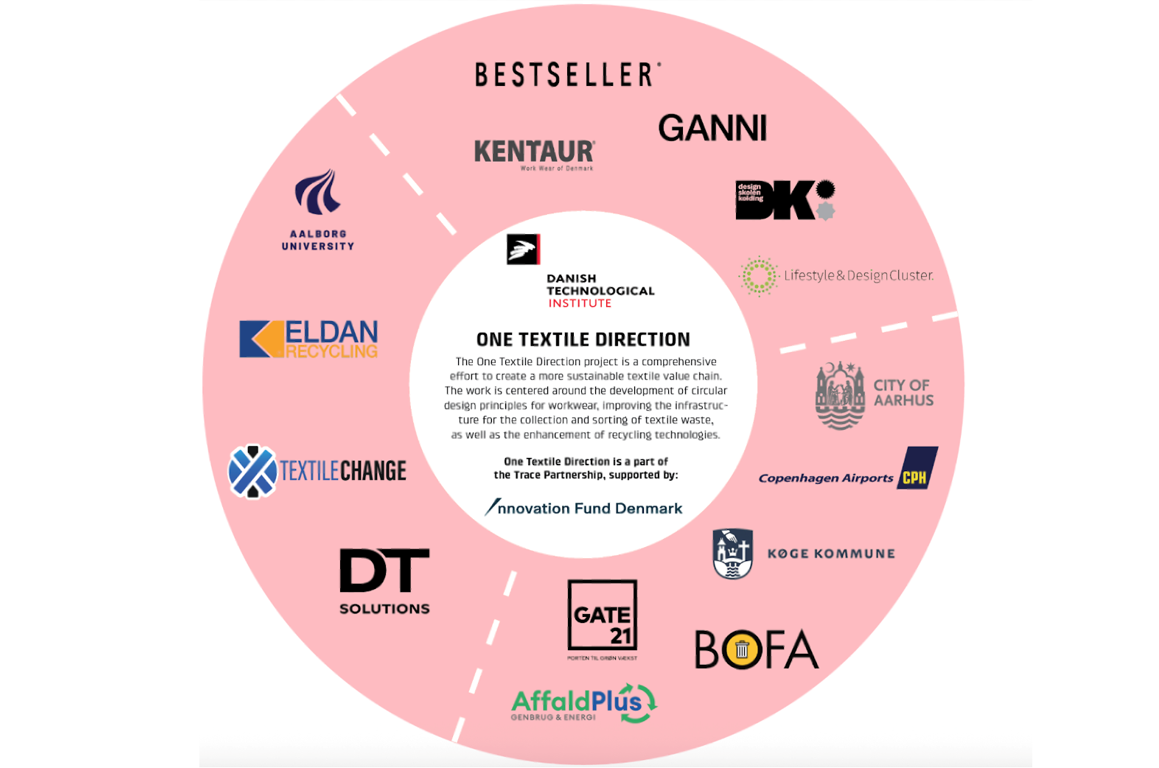
Participating partners: Aalborg University, Design School Kolding, Danish Technological Institute, Lifestyle & Design Cluster, Bestseller, Ganni A/S, Gate 21, Kentaur, Aarhus Municipality, Køge Municipality, Copenhagen Airports (CPH), DT Solutions, BOFA, AffaldPlus, Eldan and Textile Change.
Project Results
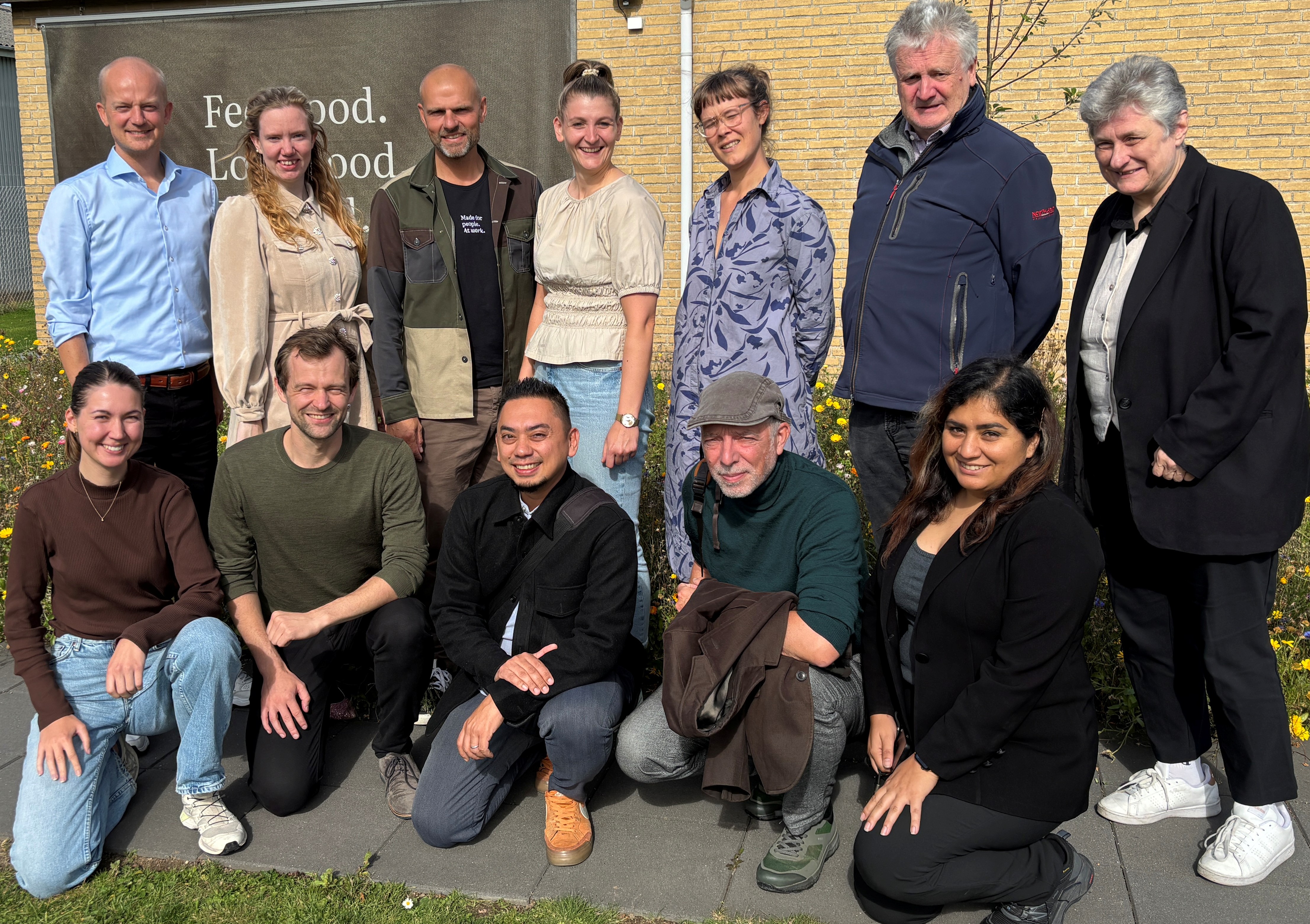
The One Textile Direction (OTD) project united 17 partners across the textile value chain—including municipalities, waste operators, technology providers, apparel companies, a design school, a university, a GTS institute, and an airport—to address barriers to textile circularity in Denmark.
Key results:
- Comprehensive mapping of textile manufacturers and recycling actors in Denmark, made publicly accessible through interactive tools and published in an international book chapter.
- Best-practice recommendations for textile waste collection, optimising efficiency, sustainability, and value recovery.
- Technical tests demonstrating that recycled materials perform on par with conventional materials in terms of durability and washing resistance, providing concrete evidence that the selected recycled textiles do not compromise on quality for the tested workwear.
- Consumer tests confirmed user acceptance of recycled workwear, with feedback addressing material performance, fit, and design.
- A textile waste tracking study mapped post-consumer textile flows from Bornholm, generating new insights into actual waste destinations.
- Successful demonstration of electrospinning recycled PET and cellulose into nanofibers, proving new potential applications for recycled textiles.
- Commercialization of Textile Change's chemical recycling technology, including development of requirement specifications and OPEX/CAPEX models for a commercial-scale plant.
Key learnings:
- Managing 17 partners required a substantial time to build internal coherence and shared goals.
- Regulatory uncertainty remains the primary barrier to industry investment in textile recycling infrastructure.
- Recycled textiles can meet the same technical standards as virgin materials, removing a key market barrier.
- Cross-sectoral collaboration between public and private actors created valuable mutual learning opportunities rarely achieved in conventional projects.
The project has generated a spin-off project on sustainable public procurement, building on the extensive knowledge base and partnerships developed.
For more information about the project, see the report linked below.
The following studies have been published as part of the Trace-project One Textile Direction:
Publications (AAU)
- Mohtaram, F.; Fojan, P. (2025). From Waste to Value: Advances in Recycling Textile-Based PET Fabrics. Textiles, 5, 24. https://doi.org/10.3390/textiles5030024
- Mohtaram, F., Petersen, M., Ahrenst-Mortensen, M., Boysen, L. S., Gram, F. H., Malling, H. H., ... & Fojan, P. (2024). Near-Field Direct Write Electrospinning of PET-Carbon Quantum Dot Solutions. Materials, 17(24), 6242. https://doi.org/10.3390/ma17246242
Other Publications
- DSKD, LDC (2024). Textile Manufacturers in Denmark 2024. MyMaps map: Textile Manufactures in Denmark - Map
- DSKD, LDC (2024/25). Danish Recyclers & Sorters Mapping 2024/25. MyMaps map: Danish Recyclers & Sorters - Map
Project Leader

Lars Haahr Jepsen
Mail: laje@teknologisk.dk
Other Textile Projects


